
APRA Lending Changes 2026: Investors Guide
By properT network
Is APRA’s latest move a one-off decision, or the start of new lending rules that could reshape investor borrowing? The property playbook may restart again. At a CRITICAL time when there are just NOT ENOUGH rental properties on the market!! Go figure???
Today, we dive deep with industry leading research and development data recently shared, to decode what’s really happening behind the headlines. We’ll explore APRA’s recent decision to cap high debt-to-income lending, lender tightening on trusts and self-managed super funds (SMSFs), and what all this means for property investors across Australia.
NB : APRA’s New Lending Limits
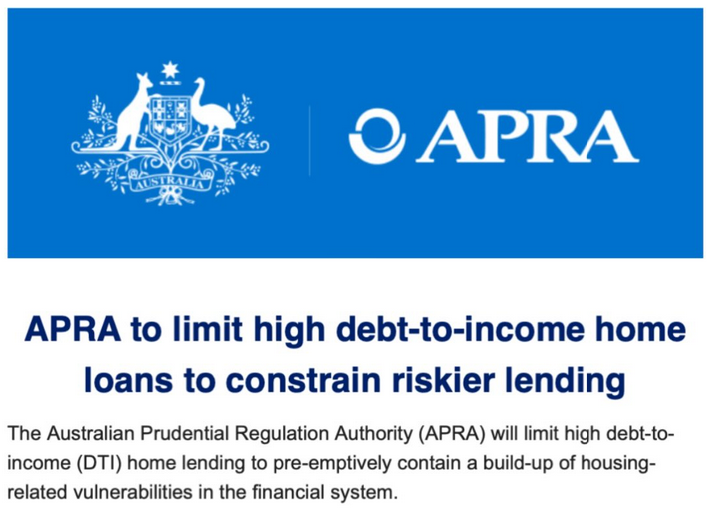
APPRA explains the recent macro-prudential policy changes:
APRA’s New Debt‑to‑Income (DTI) Limit — Effective 1 February 2026
From 1 February 2026, the Australian Prudential Regulation Authority (APRA) will require banks and authorised deposit‑taking institutions to limit high‑DTI lending — defined as loans where the amount borrowed is six times income or higher — to no more than 20 % of new home loans written. This cap applies separately to owner‑occupier and investor portfolios. Read more here.
This policy aims to preemptively contain the build‑up of riskier high‑DTI lending rather than curb mainstream home loan approvals. It acts as a macroprudential “guardrail” to maintain banking and household financial resilience amid rising credit growth.
“APRA is limiting high debt-to-income lending to 20% of all new lending. For borrowers looking to borrow more than six times their income, this may mean tighter restrictions.”
Currently, only about 6% of all lending is above this ratio. So while it has made headlines, the immediate market impact is expected to be modest. It’s more of a warning shot from APPRA to lenders to maintain responsible lending practices.
“It could be a precursor to other changes in 2026, but for most households, nothing drastic will happen immediately. It mainly affects first-home buyers taking on high debt and investors owning multiple properties.”
Read more from APRA here
How Banks’ Credit Policies May Diverge From February
Some borrowers may notice bank credit policies start to diverge from February 2026 as lenders respond differently to the new limit and manage their high‑DTI exposure. The differences you might see include:
- Slightly reduced borrowing power for higher‑income or stretched borrowers at certain lenders.
- Variations in assessment buffers or servicing calculations between banks.
- Greater weight on deposit size and income mix than previously, especially for borrowers near policy thresholds.
This means that a “no” from one lender doesn’t necessarily mean a “no” across all lenders — making comparing policies more important than ever when rules tighten. We have access to highly qualified independent and professional Mortgage Brokers we can comfortably refer you to, to discover your own Borrowing Capacity, and or how much you can borrow in your SMSF.
Investor Lending Growth and What It Means
Investor loans have been rising rapidly as the Australian property market demonstrates continued Investment Opportunity :
- September year-on-year growth: 7.3% and October year-on-year growth: 7.9%
This is the fastest investor credit growth since 2015, when similar restrictions were applied. If growth continues, we may see more limits on:
- Interest-only loans
- Speed limits on investor credit growth
“High investor borrowing is being monitored, and future measures may aim specifically at curbing excessive investor debt.”
Trusts and Self-Managed Super Fund (SMSF) Lending
Recent moves by major lenders, including Macquarie and CBA, have tightened lending through trusts and SMSF’s. This is partly to address misleading claims about “unlimited borrowing capacity” circulating online.
“Smaller lenders may step in as bigger banks ease back, but no one is exiting this space completely. The focus is on curbing risky lending practices, not preventing investors from using these structures responsibly.”
The broader issue is unlicensed advice often given on social media and often based on very little actual experience by these spruikers. Many investors are told to set up trusts or SMSF’s without professional guidance and often introduced to properties which do not make investment sense.
“The real solution may be tighter regulation of property investment advice, investigate who is giving this “advice”, rather than heavy-handed lending restrictions which are punitive to Investors and also want to be Renters.”
Housing Supply and Construction Challenges
Australia’s housing target is ambitious: $1.2 million homes over 5 years. Currently, projections suggest around 950,000 homes will be built whilst other industry commentators refers to this 950k homes as a mere pipe dream and unachievable.
Challenges include:
- Surging construction costs (highest in 30 years) and rising
- Higher cost for land
- High interest rates making financing more expensive
- Pricing gap between new builds and existing homes, which makes buyers opt for established properties – does not necessarily make for sound investment vehicles though.
Even with relaxed zoning laws, developers need a minimum 20% margin for projects to proceed, they will not build to generate a loss. Without pre-sales and feasible financing, new projects stall. How will the dream pipeline of 950,000 be realistic? This is all inflationary.
“Planning reform helps, but we also need to make projects financially viable through reduced fees, faster approvals, and lower infrastructure costs.” However these suggestions continue to fall on deaf Government ears.
Infrastructure and Feasibility Are Key
Market Analysts emphasise:
- Infrastructure charges and delays in approvals increase costs
- Developers need sufficient land and amenities to make projects attractive
- Greenfield development requires preplanned roads and infrastructure
“If governments want more housing, they must collaborate with developers, not just dictate targets. Reducing fees, improving planning, and delivering infrastructure ahead of time are critical.”
Read recent article on Why Infrastructure underpins property growth values here
Key Takeaways for Property Investors
- APRA lending caps are a warning, but high-debt borrowers and multiple-property investors should be cautious. Bigger banks tend to take this on advice and become more prudent in their lending policy.
- Investor credit is growing fast; restrictions may increase, particularly on interest-only loans.
- Trusts and SMSF’s remain viable structures, but unlicensed advice is risky as are non-investment grade properties.
- Housing supply constraints mean new builds are limited, making strategic investment in growth areas critical.
- Infrastructure-driven growth is a reliable indicator of future capital growth for property investors.
- As Trusts and SMSF’s are taxed at lower income tax rates, higher yielding properties may make for a more sound investment strategy for these entities.
- Lack of Housing Affordability is an opportunity for investors, as vacancy remains historically tight and rents continue to rise.
Where to Invest Now
- Focus on areas with planned or under construction infrastructure, as these tend to outperform in capital growth.
- Keep an eye on regions with accelerating population growth and limited housing supply.
- Consider diversified strategies including new builds, off-the-plan apartments, and established homes in growth corridors.
First Home Buyers and APRA”s Lending Limits
First-Home Buyers: A major Catch-22!!
For many aspiring homeowners, the current property market presents a true Catch-22. On one hand, government incentives such as 5% deposit schemes are designed to help first-home buyers enter the market. On the other hand, interest rates remain high, and property prices continue to rise—partly as a result of these very schemes.
Now, with APRA “suggesting” limits on how much a person can borrow, the challenge grows even more complex. Can they borrow how much they need, in order to live where they want?
Also, borrowing at 95% of a property’s value may seem helpful, but it comes with higher repayments compared to borrowing at a more conservative 80% LVR. First-home buyers need to be highly aware of their borrowing capacity and the risks of stretching their debt-to-income ratios too far.
Meanwhile, the cost of living continues to rise, eating into cash flow and leaving many struggling to save. For those unable to purchase, being shut out of the market often means renting—further straining finances and delaying the dream of homeownership. This situation also feeds into Australia’s ongoing rental crisis, placing additional pressure on income and savings. Read more on the Rental and Property Crisis here and another article about Melbourne here.
A dream for Investors and a nightmare for want to be property owners.
It’s clear that without coordinated government action, this combination of rising costs, high interest rates, and borrowing restrictions is creating a looming crisis for first-home buyers. Policy decisions intended to support affordability are, in practice, pushing many further from achieving their property dreams.
Conclusion
APRA’s recent lending adjustments may not immediately disrupt the market, but they signal the importance of careful investment planning and tend to be a warning to banks around lending policy and Debt to Income Ratios. Investors who understand macro trends, infrastructure plans, and development feasibility will be best positioned to navigate Australia’s evolving property landscape.
The Rise in Demand for Co-Living (shared homes) on the back of Low Rental Supply and High Rents
What is a Co-Living Property and how are they so high in Yield?
10% rental Guarantees – positive income properties
Australian Housing Crisis explained
Thinking of buying Property using your Super?
APRA’s new Lending Limits and Purpose for lowering the DTI Ratio

