Why Australia’s housing affordability problem cannot be solved without confronting the fundamental imbalance between housing supply and population-driven demand
“Australia’s housing crisis has reached another troubling milestone.“
Rents are at or near record highs across much of the country. Rental listings remain severely constrained. Vacancy rates are extraordinarily tight. Housing construction continues to lag Australia’s requirements.
And Australian households are devoting an increasing proportion of their income simply to keeping a roof over their heads.
Yet against this backdrop, the Federal Government has introduced some of the most significant changes to property investment taxation in decades.
The 2026–27 Federal Budget limits negative gearing on residential property purchased after Budget night to newly built homes from 1 July 2027, while also reforming the Capital Gains Tax treatment of investments. Properties held before the announcement are grandfathered. We explain the detail in Budget 2026-27 Negative Gearing explained and the cash flow problem most property investors are missing.
The Government argues these reforms will help more Australians enter the housing market and redirect investment towards new housing supply. Its Budget material estimates the measures will support an additional 75,000 homeowners over the coming decade.
That objective may be understandable. The question is whether the policy will produce the intended outcome?
Because Australia’s housing problem ultimately comes down to something much more fundamental:
We have more people requiring housing than we are producing appropriate housing for.
And until Australia resolves that imbalance, manipulating who competes for existing housing does not resolve the underlying shortage.
Could This Be the Perfect Storm for Strategic Property Investors?
Paradoxically, the very conditions creating such difficulty for Australia’s housing market may also be creating a compelling environment for informed, long-term property investors.
Warren Buffett famously observed that investors should “be fearful when others are greedy, and be greedy when others are fearful.” While Buffett was speaking about investment markets more broadly, the principle is highly relevant to residential property today. When uncertainty causes some investors to retreat, strategic investors should be asking a different question: what happens to the value of a scarce asset when demand continues growing, whilst the supply of that asset becomes increasingly difficult and expensive to produce?
Australia is confronting precisely that situation.
Land suitable for residential development is finite, particularly in locations supported by employment, infrastructure, transport and population growth. At the same time, the cost of delivering new housing continues to rise. Construction materials, skilled labour, infrastructure charges, compliance requirements, finance costs and development costs all contribute to the replacement cost of housing.
This creates an important concept for investors: “tomorrow’s property may simply cost substantially more to produce than today’s property.“
If a developer can acquire land today, obtain approvals and construct a dwelling for a particular cost, but the same project costs materially more to deliver in a year from now, future projects must ultimately be sold at prices that make development commercially viable. Developers cannot indefinitely build homes for less than the land, construction, finance, infrastructure and regulatory costs required to produce them.
And this is where Australia’s widening supply-demand imbalance becomes particularly important.
If population and household formation continue generating demand faster than Australia can deliver new dwellings, buyers and tenants are competing for an increasingly scarce resource. At the same time, land prices and construction costs can make the next generation of housing progressively more expensive to produce.
Developers will naturally seek commercially viable margins. Where demand remains strong and supply remains constrained, the market has greater capacity to absorb higher prices. Where buyers will not pay the price required to make a project feasible, the development may simply not proceed — which further restricts future supply.
That creates a potentially powerful cycle:
population growth → greater housing demand → insufficient construction → lower relative supply → rising rents and property prices → higher land values → higher replacement costs → higher prices required for new development.
For an investor who already owns a well-selected property, those rising replacement costs can become significant. The investor is holding an asset purchased at yesterday’s land and construction costs while future buyers may be purchasing comparable housing at tomorrow’s higher replacement cost.
When acquisition prices are high and borrowing costs remain elevated, asset selection becomes even more important. Investors still need to consider location, land component, rental demand, dwelling design, demographic trends, infrastructure, future competing supply, cash flow and the price they are paying relative to genuine market value.
For investors with the financial capacity to acquire and hold quality property through the cycle, today’s combination of constrained housing supply, population-driven demand, rising replacement costs, extremely tight rental markets and reduced investor participation may ultimately prove to be less of a reason to leave the market — and more of a reason to examine the opportunities being created within it.
At properT network, this is why we believe the conversation should not simply be “Should I invest in property now?”
The more valuable question is:
“What property should I own today that people will still desperately need — and find increasingly difficult and expensive to reproduce — five, ten and fifteen years from now?”
That is the difference between simply buying property and investing strategically in investment-worthy property.
The Government Wants More First Home Buyers — But Where Are the Extra Homes?
The Government describes its negative gearing reforms as helping to “level the playing field” for first home buyers and directing investor capital towards new construction.
There is logic in encouraging investment into new supply.
In fact, this is something properT network has advocated for many years.
New housing adds another dwelling to Australia’s housing stock. An investor purchasing an established dwelling generally transfers ownership of an existing dwelling with probable lower depreciation benefits, higher maintenance costs and lower rental income, compared to the new build next door.
There is a major problem : “Australia is already struggling to build enough new housing”.
The National Housing Accord calls for 1.2 million new homes between July 2024 and June 2029 — equivalent to approximately 240,000 homes every year.
The National Housing Supply and Affordability Council reports that around 308,000 homes were completed between July 2024 and March 2026, only about a quarter of the target with close to two of the five years gone. This should concern homeowners, investors, tenants and policymakers alike.
Australia’s housing shortage cannot be solved simply by redistributing existing properties between investors and owner-occupiers.
Australia needs more dwellings!
Population Growth Continues Adding Housing Demand
The demand side of the equation cannot be ignored either.
According to the Australian Bureau of Statistics, Australia’s population increased by approximately 392,700 people (1.4%) during the year to March 2026.
Net overseas migration accounted for approximately 292,100 people of that increase.
Migration provides substantial economic and social benefits to Australia, including additional workers and skills.
But every additional household also requires somewhere to live.
Population policy therefore cannot realistically be separated from housing policy.
When population growth materially exceeds the capacity of the construction industry to deliver additional dwellings, pressure inevitably appears somewhere in the housing system.
It may appear through: higher property prices, higher rents, falling vacancy rates, increased household sizes, longer periods living with parents, increased competition for rentals, or worsening housing affordability.
This isn’t ideology.
It is supply and demand at work.
For more on what this means for investors, read Australia Population Growth: What It Means for Property Investors.
Australia’s Rental Market Is Already Under Severe Pressure
The latest rental numbers illustrate the scale of the problem.
Cotality data reported by Commonwealth Bank puts Australia’s median rent at approximately $705 per week, with renters now spending around one-third of household income on rent.
Rental listings are approximately 17% below the five-year average.
Different research organisations use different methodologies, so their median rent figures should not be directly compared as though they measure precisely the same thing.
But the direction of the data is unmistakable: “Australian tenants remain under enormous pressure.” Herein lies your Investment Opportunity.
It is also what Terry Ryder’s Hotspotting looks for. Tight rental markets sit alongside depth of demand, consistent sales activity, jobs, infrastructure and population growth among the fundamentals behind its 2026 Victorian best buys: the City of Casey, Greater Geelong and Latrobe City.
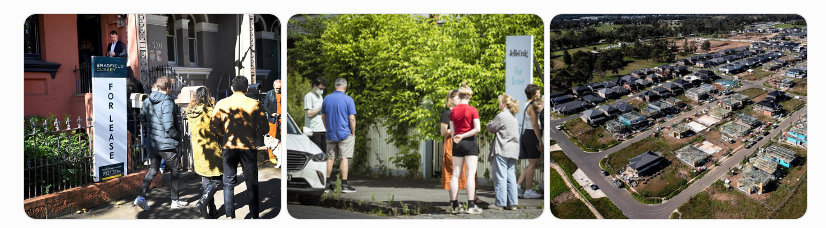
Sydney Renters Just Received a $50-a-Week Reality Check
Sydney provides perhaps the starkest recent example.
Domain’s June Quarter 2026 Rent Report found Sydney house rents increased 6.3% in a single quarter, rising $50 to a record median of approximately $850 per week.
That was Sydney’s largest quarterly house-rent increase in four years.
Brisbane house rents increased another $20 to a record $700 per week.
A $50 weekly increase represents another:
$2,600 per year.
For households already trying to accumulate a first-home deposit while paying rent, that is significant.
And this exposes one of the contradictions at the heart of Australia’s housing debate.
Policies intended to help first home buyers must also consider what happens to people before they become first home buyers.
Most are tenants.
Every additional dollar required for rent is another dollar that cannot be directed towards their deposit.
Interest Rates Add Another Layer of Pressure — Further Widening Affordability to Purchase Gap.
If a home buyer just cannot buy where they want to live and in the type of dwelling they need to live in, this means they are Renters for longer. Further increasing the pressure on supply of Rental Property.
We know Australia is also operating in a very different credit environment. The Reserve Bank lifted the cash rate again on 29 September 2026, to 4.60%, its fourth increase this year. We look at what that means for investors in Is Now a Good Time to Invest in Property?
Higher interest rates increase holding costs for leveraged property owners and reduce borrowing capacity for prospective purchasers.
At the same time, APRA introduced new debt-to-income restrictions from 1 February 2026.
Banks are limited to having 20% of new owner-occupier lending and 20% of new investor lending at debt-to-income ratios of six times income or higher.
Therefore, many aspiring buyers are confronting the combination of:
- higher property prices;
- higher mortgage repayments;
- reduced borrowing capacity;
- higher rents while saving a deposit;
- insufficient housing supply; and
- continuing population growth.
That is not an environment in which housing affordability is easily solved. Unfortunately a longer term play before any resolution.
Investors Are an Important Part of Australia’s Housing Infrastructure
One aspect of Australia’s housing debate frequently gets lost.
A residential property investor is not simply competing with a first home buyer.
An investor also provides accommodation to somebody who cannot or does not currently want to purchase a home.
- Students rent.
- Young couples rent.
- New migrants rent.
- Families between homes rent.
- People relocating for employment rent.
- Australians saving their first deposit rent.
There must therefore be sufficient housing for both owner-occupiers and tenants.
Shifting an established dwelling from an investor to a first home buyer may increase home ownership by one household.
But if that property was previously rented, the transaction may also remove one dwelling from the private rental pool.
The ownership mix changes.
The total number of dwellings does not.
That distinction is fundamental.
This Is Why New Property Investment Matters
There is, however, one element of the Government’s reforms that deserves recognition.
The Budget deliberately retains negative gearing treatment for eligible new builds because the Government wants investor capital directed towards additional housing supply.
On that principle, properT network and the Government actually share some common ground.
For many years, the overwhelming majority of properties we have recommended to investors have been new properties.
Why?
Because intelligently selected new investment property can do something established-property transactions cannot:
It increases Australia’s housing stock. Ensures higher depreciation for your investment, lower ongoing maintenance costs and in general higher rent than the older home next door and at time of resale, potentially higher resale price than the older home next door. All equating to more dollars in your pocket over the life of the Investment.
A newly constructed investment property can create another rental home while supporting construction activity and increasing overall housing supply. That is precisely the kind of investment Australia desperately needs. Read more in The New Property Premium and our Off the Plan Market Insights.
Australia Cannot Tax Its Way Out of a Housing Shortage
Ultimately, the housing debate needs to move beyond arguments about investors versus first home buyers.
Both groups need housing. So do Australia’s millions of tenants.
The fundamental issue is whether Australia is producing enough appropriate housing, in the right locations, quickly enough to accommodate population growth and household formation.
At present, the evidence suggests we are not.
Planning delays, infrastructure constraints, elevated construction costs, shortages of skilled trades, builder insolvencies and development feasibility problems continue restricting supply.
At the same time, Australia’s population continues growing.
The consequence is predictable : “When demand persistently exceeds supply, prices rise.“
For purchasers, that means higher property prices.
For tenants, it means higher rents. For investors, it means stronger rental income.
And for first home buyers trying to save while renting, it can mean being squeezed from both directions.
The Policy Question Australia Should Be Asking
Instead of asking:
“How do we reduce the number of property investors?”
Perhaps Australia should be asking:
“How do we attract significantly more private capital into creating the additional homes Australians need?”
- That means encouraging investment into genuine new supply.
- It means making development financially viable.
- It means reducing unnecessary planning delays.
- It means ensuring infrastructure keeps pace with population growth.
- It means expanding construction capacity.
- And it means recognising that a functioning private rental market is an essential component of Australia’s housing system.
The Government is entitled to argue that its reforms will improve home ownership.
Property investors and industry participants are equally entitled to question whether reducing incentives for investment in established rental housing will produce unintended consequences for tenants.
The outcome will ultimately be judged by the data, and so far the early signs point to an adverse effect on first home buyers and renters.
The Numbers Will Tell the Story
Over the next several years we should be watching several indicators very carefully:
rental vacancy rates, advertised rents, investor lending, investor purchases, new dwelling commencements, dwelling completions, population growth and progress towards the 1.2 million-home Housing Accord target.
If rental supply contracts while population and housing demand continue increasing, rents are unlikely to become more affordable.
And if Australia’s construction industry remains unable to produce housing at anything approaching the rate required, transferring ownership of existing dwellings between investors and owner-occupiers cannot solve the underlying housing shortage.
Australia doesn’t simply have a property-price problem.
It has a housing supply problem.
Until governments address that fundamental imbalance, policies promoted as improving housing affordability risk merely shifting the pressure from one group of Australians to another.
And too often, the people ultimately paying the price are the very people those policies were intended to help.
History Shows That Periods of Disruption Can Create Opportunity
History repeatedly demonstrates that periods of uncertainty and disruption can create opportunities for those who are prepared to look beyond the immediate headlines.
Australian property has been tested many times before. We have lived through the Global Financial Crisis, COVID-19, periods when banks significantly tightened investor lending, rapidly rising interest rates, credit restrictions and repeated predictions that property prices were about to fall substantially.
Each event created uncertainty. Some buyers and investors withdrew from the market, finance became more difficult and confidence weakened.
Yet none of those events changed the fundamental long-term requirement for Australians to have somewhere to live.
The market eventually moved through each cycle, and Australian property values have risen substantially over the longer term. Rents have also increased significantly as population growth, household formation and insufficient housing construction have placed increasing pressure on available rental accommodation.
Is it worthy of your investment dollars?
Anyone can buy a property. We help you find the right one.
Talk to properT network about your strategy, or have a property you’re considering independently reviewed before you commit.
Stephen Lazar | Founder & Managing Director — properT network
Creating Positive Wealth Outcomes through Educated, Strategic Property Investment.
Related Property Investment Resources
Is Now a Good Time to Invest in Property? Why yield, not price, is what counts
Where to Invest in Melbourne and Victoria: our location research
9 Things to Consider Before Investing in Co-Living Property
Australia’s Housing Shortage is Driving Property Prices and Rents – investors opportunity is now
Budget 2026-27 Negative Gearing explained
Why I would not invest in a Co-Living Property … and or why I would
Rental Guarantees and Co-Living Property Investment
The Rise of High-Yield Investment Property Strategies
Autumn 2026 Property Market Insights and Growth Hotspots
Apartments are gaining momentum
FAQ Section
Why is Australia experiencing a rental crisis?
Australia’s rental crisis is being driven by strong population growth, low housing supply, planning delays and years of underbuilding.
Will rents continue to rise?
Where supply remains constrained and vacancy rates stay low, rental pressure is likely to persist, although growth rates may vary between locations.
Is now a good time to invest in property?
Many investors believe periods of constrained supply and strong rental demand can create attractive long-term opportunities, particularly when focusing on investment-grade assets. Read our full answer: Is Now a Good Time to Invest in Property?
What is investment-grade property?
Investment-grade property refers to real estate selected using proven fundamentals including location, demand, scarcity, owner-occupier appeal, infrastructure and long-term capital growth potential. Not sure whether a property qualifies? Have it reviewed.